

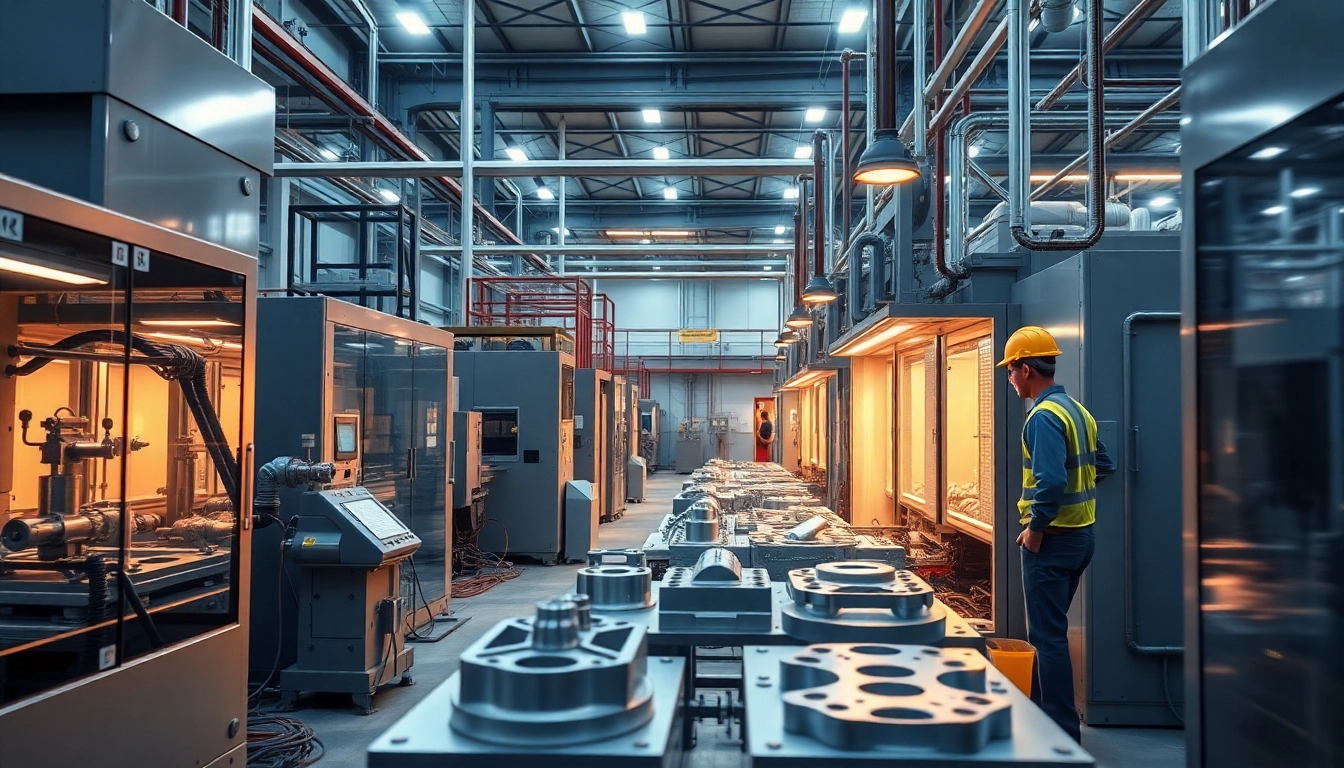
The Importance of Precision Die Casting in Manufacturing
Precision die casting is a cornerstone of modern manufacturing, playing a pivotal role in creating intricate components with high dimensional accuracy. This technique allows for the mass production of parts integral to industries such as automotive, aerospace, and electronics. In Malaysia, companies are increasingly recognizing the benefits of this manufacturing process, which not only enhances product quality but also optimizes production efficiency and cost-effectiveness. When exploring options, precision die casting malaysia provides comprehensive insights into the capabilities available in the region.
Understanding Precision Die Casting
Precision die casting involves forcing molten metal into a mold under high pressure, resulting in parts that require minimal finishing. This process is particularly beneficial for producing complex shapes with high consistency. Metals commonly used in precision die casting include aluminum, zinc, and magnesium, each offering unique properties tailored to specific applications. One of the primary advantages of precision die casting is the ability to produce intricate details and thin walls, which are often essential in various high-tech industries.
Applications of Precision Die Casting in Various Industries
Precision die casting finds applications across various sectors:
- Automotive: Components such as engine blocks, transmission housings, and brackets are produced using precision die casting for their lightweight and strength characteristics.
- Aerospace: This industry relies on die casting for critical components that must meet stringent safety and performance standards, including structural parts and housings.
- Electronics: Enclosures for electronic devices, connectors, and heat sinks are often produced using precision die casting to provide better thermal management and aesthetic appeal.
- Medical Devices: Precision components in medical devices require high accuracy and reliability, making die casting an ideal choice for manufacturers.
Benefits of Choosing Precision Die Casting Malaysia
Manufacturing in Malaysia offers numerous advantages for precision die casting, including access to skilled labor, advanced technology, and competitive pricing. Local manufacturers are increasingly adopting state-of-the-art machinery and techniques, ensuring high-quality outputs that meet global standards. Additionally, Malaysia’s strategic geographical position provides efficient logistics for exporting products, making it an attractive hub for companies seeking to enhance their supply chains.
Key Technologies Driving Precision Die Casting
Advanced Machinery in Die Casting
The evolution of machinery has significantly impacted the efficiency and quality of precision die casting. Modern die casting machines incorporate features such as:
- Computer Numerical Control (CNC) for improved accuracy
- Robotics for automation, which minimizes human error
- Real-time monitoring systems that ensure consistent quality throughout the production process
These advancements contribute to faster cycle times and reduced operational costs, enabling manufacturers to fulfill large orders without compromising quality.
Innovative Materials Used in Precision Casting
The choice of materials in die casting is critical to achieving the desired properties in the final product. In Malaysia, manufacturers are increasingly using advanced alloys and composites, such as:
- Aluminum Alloys: Known for their lightweight and corrosion resistance, aluminum parts are commonly found in automotive and aerospace applications.
- Zinc Alloys: These materials provide excellent finishing characteristics and are often used in highly detailed components.
- Magnesium Alloys: Their high strength-to-weight ratio makes them ideal for industries where weight reduction is crucial.
Technological Trends for 2025 in Die Casting
As we advance toward 2025, several trends are shaping the future of precision die casting:
- Additive Manufacturing: Integrating 3D printing with die casting processes is helping manufacturers create complex molds more efficiently.
- Sustainability: There is an increasing focus on using recycled materials and reducing waste during the die casting process.
- Smart Manufacturing: The adoption of IoT devices for monitoring production processes is enhancing transparency and predictive maintenance.
Choosing the Right Die Casting Partner in Malaysia
Key Factors to Consider When Selecting a Manufacturer
Finding the right die casting partner in Malaysia requires careful evaluation of several factors:
- Experience: A manufacturer with a proven track record in precision die casting can leverage best practices to deliver quality products.
- Technology: Companies that invest in advanced machinery and software solutions tend to offer superior services.
- Customer Service: A responsive and customer-focused approach can significantly enhance the overall partnership experience.
Evaluating Quality and Certifications
Quality assurance is paramount in the die casting industry. When selecting a partner, ensure they hold relevant certifications such as ISO 9001, which reflects a commitment to quality management systems. It is also beneficial to look for industry-specific certifications that highlight expertise in certain fields.
How to Assess a Manufacturer’s Capabilities
To evaluate a manufacturer’s capabilities, consider the following:
- Request samples of previous work to analyze quality and precision.
- Review their production capacity to ensure they can meet your demands.
- Assess their supply chain management to gauge their ability to source materials efficiently.
Common Challenges in Precision Die Casting
Addressing Design and Engineering Issues
One of the most significant challenges in precision die casting lies in the design phase. Complex geometries can lead to difficulties during the casting process. To mitigate these issues, manufacturers should:
- Engage in early collaboration with design engineers to streamline the transition from concept to production.
- Utilize simulation software to predict potential problems before committing to production.
Overcoming Production Challenges in Die Casting
Production challenges, such as variations in temperature and pressure, can affect the quality of the final product. To overcome these hurdles, manufacturers should focus on:
- Implementing stringent process controls to maintain consistency.
- Regular maintenance of machinery to prevent breakdowns and resultant delays.
Best Practices for Quality Assurance
To ensure high-quality die casting products, companies should adopt the following best practices:
- Conduct regular training for staff to keep them updated on the latest techniques and standards.
- Utilize advanced inspection technologies, such as 3D scanning, to verify dimensional accuracy.
Future Trends in Precision Die Casting Malaysia
Sustainability in Die Casting Practices
Sustainability is becoming a critical focus in the die casting industry. Many manufacturers in Malaysia are adopting eco-friendly practices, including the use of renewable energy sources and recycling scrap materials, which not only reduces waste but also lowers operational costs.
Emerging Markets and Global Competition
As global demand for die casting continues to grow, Malaysian manufacturers must navigate increasing competition from countries like China and India. To remain competitive, it is essential to focus on product innovation, cost reduction, and high-quality production standards.
Predictions for the Die Casting Industry in 2025
Looking forward to 2025, the precision die casting industry in Malaysia is expected to experience significant changes, including:
- Greater integration of artificial intelligence in production processes for enhanced efficiency and accuracy.
- Increased focus on customization, driven by consumer demand for personalized products.
- Expansion into new markets, particularly in the ASEAN region, as trade partnerships strengthen.
